A Woman Confidently Guiding Her Dog Up a
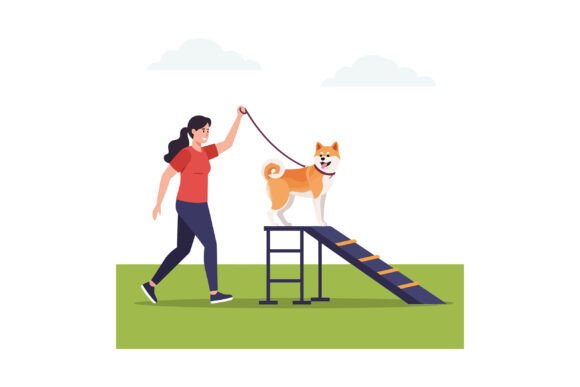
When I first opened A Woman Confidently Guiding Her Dog Up a, I was immediately struck by the sense of motion and partnership in this piece. This is not a static, posed illustration. It captures a real moment of trust between a handler and her dog moving up an agility ramp, with the dog's cheerful energy balanced by the woman's steady, guiding posture. As someone who has stitched hundreds of machine embroidery designs and evaluated thousands more for real project use, I can tell you that what matters most is how a design reads after it leaves the hoop. This one promises a lively, story-driven look that could work beautifully across a range of handmade products and custom apparel items.
First Impressions of the Design
The mood here is positive, active, and warm. The woman and dog are positioned in a way that suggests forward movement, and the agility ramp anchors the scene without cluttering it. The overall shape is somewhat horizontal, which gives it a natural banner-like feel. For embroidery, that means you have a design that will sit nicely across the chest of a sweatshirt, the front of a tote bag, or the center of a pillow cover. The detail level appears moderate, with clean outlines and solid fill areas that should translate well into satin stitch and fill stitch work. There is enough visual personality to make this feel like a custom piece of art, but not so much complexity that it becomes a thread management nightmare. That balance is rare, and it is exactly what I look for when I am evaluating digital embroidery files for my own projects or advising Etsy sellers and small shop owners on what to stock.
A Real Project Scenario
Let me walk you through a real use case. A client recently asked me to create a series of custom tote bags for a dog training school's fundraising event. They wanted something that communicated the bond between handler and dog, and they needed it to be clean enough to embroider on cotton canvas totes. I decided to test A Woman Confidently Guiding Her Dog Up a for that project. After opening the ZIP, which contained SVG, EPS, JPG, and PNG files, I imported the SVG into my embroidery software to check the stitch conversion. I adjusted the scale to fit a standard 5 by 7 hoop, keeping in mind that the ramp and the figures needed enough breathing room so the stitch density would stay balanced. I ran a test stitch on scrap cotton, using a medium weight cutaway stabilizer. The result was clean, the satin stitch outlines held their shape, and the fill stitches covered smoothly without puckering. The design read clearly from a few feet away, which is crucial for a tote bag that will be carried around a busy event. My client was happy, and the totes sold out by noon.
How This Design Performs Across Products
I have seen this type of illustration work well on several product categories, and I believe A Woman Confidently Guiding Her Dog Up a will follow that pattern. Here is how I would rate its potential across common embroidery project types.
- Custom apparel such as sweatshirts, t-shirts, and hoodies. The horizontal layout fits nicely across the chest or upper back. Use a medium weight cutaway stabilizer for knit fabrics. I recommend testing thread colors against the garment color before stitching.
- Tote bags and aprons. The design stands up well on medium weight cotton and canvas. The cheerful dog image adds a friendly touch that customers at craft fairs and Etsy shops seem to respond to. Keep the design at least 4 inches wide to preserve detail.
- Embroidered patches. This design could be digitized as a patch with a merrowed edge or a satin stitch border. The agility ramp provides a natural bottom edge, and the figures are distinct enough that cutting around them would be manageable. Patches are a great way to sell this design as a finished product without committing to a full garment run.
- Pillow covers and tea towels. Home decor items are another strong fit. The design has a narrative quality that works well on a pillow cover for a dog lover's couch or a tea towel in a pet friendly kitchen. I would use a tearaway stabilizer for tea towels and a cutaway for pillow covers.
- Baby and children's items. While the theme is dog training, the mood is cheerful and accessible. I could see this on a baby onesie or a toddler shirt for a family that loves dogs. Just scale it down carefully and check that small details remain stitchable.
- Holiday and gift products. This design would make a thoughtful personalized gift for a dog owner, a trainer, or someone who enjoys agility sports. Embroidered on a blanket, a cap, or a sweatshirt, it becomes a sentimental item that feels custom and intentional.
Where to Use This Design Carefully
No design is perfect for every surface, and I always tell my clients to think about where a design might struggle before they commit. A Woman Confidently Guiding Her Dog Up a has some considerations that are worth noting.
- Small hoop sizes. If you are working with a 4 by 4 hoop, scaling this design down too much will cause the figures to lose clarity. The dog's face and the woman's posture need enough space to read properly. I recommend a minimum width of 3.5 inches for the full scene.
- Textured or very thin fabrics. Fleece, velvet, or lightweight silks can be tricky. The fill stitch areas may sink into high pile fabrics, and thin fabrics may not support the stitch density without showing through. Test on a scrap piece first.
- Stretchy fabrics. T shirts with high spandex content can cause the design to distort if not stabilized properly. Use a cutaway stabilizer and consider a temporary spray adhesive to keep the fabric flat.
- Dark fabrics. The design features a bright outdoor setting, so contrast matters. If you stitch this on a dark background, make sure the thread colors are light enough to stand out. A white or light gray outline can help define the shapes.
- Curved surfaces like caps. The horizontal composition may be too wide for a standard cap front without curving the design. If you want to use it on a cap, adjust the digitizing to accommodate the curve, or place the design on the side or back of the cap instead.
- Dense stitch areas. Depending on how the design is digitized, the ramp area may have higher stitch density than the figures. This can cause stiffness in the finished embroidery. If you are stitching on a soft garment, make sure the density is balanced.
- Test on scrap fabric first. I cannot overstate this. Even if the design looks clean on screen, fabric behaves differently. Stitch it out once on a fabric similar to your final product. Check the tension, the stitch coverage, and the overall look.
- Check thread color contrast. The design description mentions a bright outdoor setting. That suggests vivid colors. Make sure your thread palette includes a bright sky blue, a warm grass green, and a clear color for the woman's clothing. Test the combination against your base fabric.
- Review stitch density. If you are using an embroidery software, open the design and look at the density settings. If the design has too many stitches per square inch, it may cause puckering on lightweight fabrics. Adjust if needed, or use a heavier stabilizer.
- Confirm hoop size. The ZIP file includes SVG, EPS, JPG, and PNG, which are vector and image formats, not native embroidery file formats. You will need to convert or import the SVG into your embroidery software and assign a hoop size. Make sure your hoop can accommodate the design at the size you want.
- Inspect small details. The dog's cheerful expression and the woman's guiding posture are the heart of this design. If small features like the dog's ears or the woman's hand placement become muddled at your chosen size, consider enlarging the design or simplifying those areas.
- Test in black and white. Before committing to color thread, print the JPG or PNG in grayscale. This helps you see whether the design relies on color contrast or shape contrast. Good embroidery should read well even without color.
- Compare light and dark fabric backgrounds. Stitch the design on a light fabric and a dark fabric using the same thread colors. See which version looks stronger. This will help you decide which products to offer it on.
- Use proper stabilizer. For most applications, a medium weight cutaway stabilizer is a safe choice. For dense designs or stretchy fabrics, use a heavy cutaway. For tea towels or quilting cotton, a tearaway may suffice, but test first.
- Check licensing. The product is listed under Illustrations and Graphics, and the files are SVG, EPS, JPG, and PNG. Before you sell finished products or digital products featuring this design, confirm the license terms. Some graphics allow commercial use in physical products but not in digital resale. If the license details are not clear in the product description, contact the seller before you start selling.
Practical Notes for Embroidery Designers and Sellers
I have been working with machine embroidery designs for long enough to know that the difference between a successful project and a frustrating one often comes down to preparation. Here are the steps I take before I use a design like this in a client project or for my own shop inventory.
How This Design Affects Product Value and Customer Trust
When I review a design for my own Etsy shop or for a client's small business, I always ask how it will affect the customer's perception of the product. A design like A Woman Confidently Guiding Her Dog Up a carries a specific emotional weight. It speaks to people who value the relationship between a person and their dog. That emotional resonance can raise the perceived value of a handmade product. A tote bag with this embroidery feels like more than a bag. It feels like a statement about training, trust, and shared activity. Customers who connect with that theme are more likely to engage with the product, leave a positive review, and share it with others. For a craft business, that kind of emotional connection is gold.
From a professional standpoint, the design also communicates that you care about quality. The clean lines and well proportioned figures suggest that you selected a design with intention. That builds trust with buyers who are tired of poorly digitized embroidery that looks fuzzy or distorted after washing. If you stitch this design well and present it on a quality garment or home decor item, your customers will notice the difference.
Final Thoughts Before You Stitch
A Woman Confidently Guiding Her Dog Up a is a design that rewards careful preparation. It offers a strong visual story, a positive mood, and enough flexibility to work on a range of products. Whether you are making a custom sweatshirt for a dog trainer, a tote bag for a fundraising event, a pillow cover for a pet lover, or an embroidered patch for your craft fair booth, this design has real potential. Just remember to test your thread colors, check your hoop size, use the right stabilizer, and confirm your licensing. The extra time you spend upfront will save you from disappointing results and wasted materials. If you handle that preparation well, this design will stitch out cleanly and your customers will feel the care you put into every stitch.