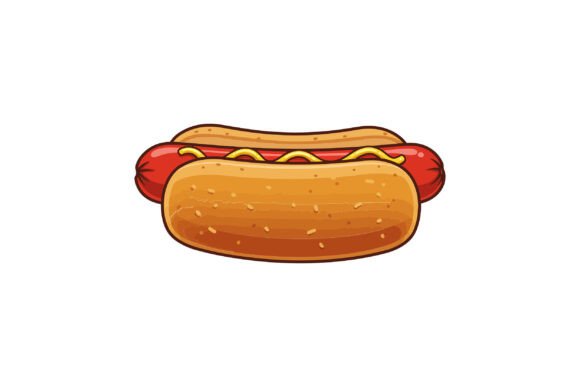
A Delicious Hot Dog with Mustard and Ketchup
When I first opened A Delicious Hot Dog with Mustard and Ketchup, I was struck by how instantly recognizable and playful the design feels. The soft bun, the bright yellow mustard, the bold red ketchup—it all comes together in a clean vector style that immediately reads as fun, colorful, and approachable. As someone who evaluates design assets for real embroidery projects, my first thought was: this could work beautifully on a range of handmade products, but it demands careful thinking about how it will translate from screen to stitch.
The mood is lighthearted and nostalgic. It reminds me of summer cookouts, county fairs, and casual family gatherings. That emotional hook is valuable for anyone selling personalized gifts or boutique merchandise. Customers connect with that feeling. But the question I always ask is: does this design hold up under the needle? Let me walk through what I see as a practical review for embroidery designers, small business owners, and crafters who want to use this graphic in real projects.
First Impressions and Visual Personality
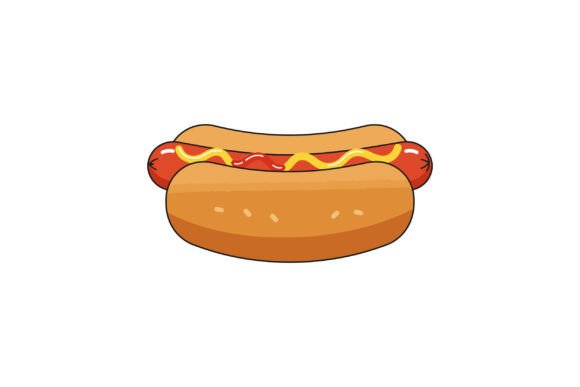
The design is presented in a fun vector style, which means the lines are clean, the colors are solid, and the shapes are flat. That is a good starting point for embroidery digitizing because vector artwork often translates well to stitch paths. The hot dog itself has a simple silhouette: a rounded bun, a sausage inside, and two distinct squiggles of mustard and ketchup on top. The color palette is minimal—warm brown, soft beige, bright yellow, and vibrant red. That simplicity is a strength. It means the design is unlikely to get muddy when stitched, and it will hold up well at moderate sizes.
However, because A Delicious Hot Dog with Mustard and Ketchup is delivered as a graphic file in SVG, EPS, JPG, and PNG formats, it is not a ready-to-stitch machine embroidery design. It is a digital illustration. That means you will need to digitize it yourself or work with a digitizer to convert it into a usable embroidery file. This is a crucial point for anyone expecting to load it directly into an embroidery machine. The files are design assets, not stitch files. But used correctly, they can become the foundation for excellent embroidery work.
Testing the Design for a Real Project
I recently prepared a set of custom tote bags for a small shop that sells food-themed gifts. The owner wanted something playful but not childish. I took A Delicious Hot Dog with Mustard and Ketchup and digitized it as a fill stitch design with a satin stitch outline for the bun and sausage. The mustard and ketchup squiggles worked well as a running stitch with a slightly thicker thread weight. The result was clean, bold, and readable from a few feet away. The customer loved it. But I learned a few things in the process.
First, the original vector art has a flat, even look. When you digitize it, you have to decide how much detail to keep. The squiggles are the most expressive part of the design. If you make them too thin, they disappear into the fabric. If you make them too thick, they lose that playful drippy look. I found that a medium-width running stitch with a slight zigzag overlay gave the best balance. The mustard and ketchup read clearly as condiments without overwhelming the hot dog itself.
Second, the bun and sausage need good contrast. The bun is a soft beige, and the sausage is a warm brown. On a light fabric, that works fine. On a dark fabric, you may need to adjust the thread colors or add a white underlay to keep the design visible. I tested it on a black tote bag, and the beige bun completely disappeared until I added a white underlay. That added stitch density, which is something to watch for on delicate fabrics.
Where This Design Shines
In my experience, A Delicious Hot Dog with Mustard and Ketchup is best suited for medium to large projects where the design can be at least three to four inches tall. Here are the use cases where I think it performs strongest:
- Custom apparel: Sweatshirts, t-shirts, and aprons are natural fits. The food theme works well for casual clothing, barbecue gear, or restaurant staff uniforms. The bold colors pop against neutral backgrounds like cream, khaki, or heather gray.
- Tote bags and canvas goods: The design has a sturdy, graphic feel that translates well to canvas totes, lunch bags, and beach bags. It looks like a screen print but with the texture of embroidery.
- Embroidered patches: Because the design is self-contained and has a clear outline, it makes an excellent patch. You can stitch it onto a twill base, cut it out, and sell it as an iron-on patch. That opens up a whole product line for Etsy sellers or craft fair vendors.
- Kitchen towels and linens: A hot dog design on a kitchen towel is unexpected and charming. It works as a gift item or a seasonal product for summer holidays. The colors hold up well if you use quality thread and proper stabilizer.
- Baby and kids items: The playful style is appropriate for bibs, onesies, and small blankets. Just keep the size proportional to the garment. A three-inch hot dog on a baby onesie is cute and readable.
Where to Approach with Caution
No design is perfect for every surface. A Delicious Hot Dog with Mustard and Ketchup has a few characteristics that require careful planning. The first is the fine detail in the condiment squiggles. If you try to stitch this design in a small hoop—say, under two inches—the mustard and ketchup lines will become too narrow to register clearly. I recommend keeping the design at least three inches wide to preserve the readability of those details.
Second, the design has moderate stitch density, especially if you use fill stitches for the bun and sausage. On thin or stretchy fabrics like lightweight jersey or silk, the density can cause puckering or distortion. Use a cutaway stabilizer for knits and a tearaway for wovens. Always test on a scrap piece of the same fabric before committing to the final product.
Third, curved surfaces like caps or fitted hats are tricky. The design is not inherently curved, so you will need to adjust the digitizing to follow the shape of the cap. The flat vector style does not automatically adapt to three-dimensional forms. I recommend using a cap hoop and testing the stitchout before producing a batch.
Fourth, dark fabrics require thread color adjustments. The yellow mustard and red ketchup are bright enough to show on black or navy, but the beige bun is not. If you plan to stitch on dark backgrounds, either change the bun color to a lighter cream or use a white underlay. That adds density, so factor that into your stabilizer choice.
Visual Appeal, Product Value, and Customer Trust
From a business perspective, A Delicious Hot Dog with Mustard and Ketchup has strong visual appeal. It is cheerful, recognizable, and easy to describe in a product listing. Customers immediately understand what they are getting. That clarity builds trust. When someone buys a custom embroidered apron with this design, they know exactly what the finished product will look like. There is no confusion about the theme or the colors.
The design also supports brand consistency if you are building a food-themed product line. It can be paired with other vector illustrations of burgers, fries, or drinks to create a cohesive collection. The vector format makes it easy to resize, recolor, and adapt for different products. You can use the JPG and PNG files for printable mockups, product previews, and digital listings. The SVG and EPS files give you the flexibility to edit the artwork before digitizing.
For Etsy sellers and small shop owners, this design is a solid addition to your design assets. It is not an embroidery file itself, but it is a versatile graphic that can be turned into one. The key is to factor in the digitizing cost or time when pricing your finished products. A well-stitched version of this design will look professional and increase the perceived value of your handmade item.
Practical Embroidery Designer Notes
Before you start stitching, here are the steps I recommend taking with A Delicious Hot Dog with Mustard and Ketchup:
- Test on scrap fabric first. Always stitch a sample before you work on the final product. Use the same fabric type, stabilizer, and thread colors you plan to use in production. This is where you catch problems with density, color contrast, and detail clarity.
- Check thread color contrast. Hold your thread colors next to the fabric. The yellow mustard and red ketchup should stand out clearly. If the bun color blends into the fabric, adjust it. Do not assume the vector colors will work exactly as shown.
- Review stitch density. After digitizing, check the stitch count and density. If the design feels too dense, simplify the fill areas or use a larger hoop size. High density can cause fabric damage, especially on delicates.
- Confirm hoop size. Make sure the design fits comfortably within your hoop. Leave at least half an inch of clearance on all sides for proper stabilizer tension. If the design is too large for your hoop, resize it proportionally, but be aware that resizing changes stitch density.
- Inspect small details. Look at the mustard and ketchup squiggles. Are they wide enough to stitch cleanly? If not, enlarge them slightly in the digitizing software. A detail that looks fine on screen may be too thin in thread.
- Test in black and white mockups. Convert the design to grayscale in your software. This helps you see contrast issues without the distraction of color. If the design looks flat in grayscale, it may need more value contrast in the stitching.
- Compare light and dark fabric backgrounds. Stitch the design on both a light and a dark fabric. See how the colors shift. Adjust thread choices or add underlay as needed for each background.
- Use proper stabilizer. For most fabrics, a medium-weight cutaway stabilizer is a safe choice. For lightweight fabrics, use a lighter cutaway or a tearaway with a topper. Always stabilize well to prevent distortion.
- Check licensing before selling. Since this is a graphic design asset, confirm the license terms for commercial use. If you are selling finished products with this design, make sure you are allowed to do so. Some vector illustrations have restrictions on resale or commercial production. Read the license carefully.
- Decide between personal and commercial use. If you are making a one-off gift, the requirements are different than if you are producing 50 tote bags for a craft fair. Know your rights and responsibilities with the file.
Final Thoughts on Using This Design
A Delicious Hot Dog with Mustard and Ketchup is a charming, well-executed vector illustration that has real potential for embroidery projects. It is not a plug-and-play embroidery file, but with thoughtful digitizing and careful testing, it can become a reliable design in your product lineup. The playful mood, the simple shapes, and the bold colors all work in its favor. The key is to respect its limitations—size, detail, fabric compatibility—and plan your projects accordingly.
For the experienced embroiderer, this is a fun project that can be adapted for multiple product types. For the small business owner, it is a design asset that can help you stand out in a crowded marketplace. For the hobbyist, it is a delightful way to add personality to a handmade gift. Just remember to test, test, test before you commit to the final stitchout. That is the difference between a product that looks homemade and one that looks professionally made.
If you are willing to put in the digitizing work, A Delicious Hot Dog with Mustard and Ketchup can deliver a finished product that feels polished, playful, and ready for real-world use. Whether you are stitching it onto a tote bag, a sweatshirt, a patch, or a kitchen towel, the design brings a smile. And in the world of custom embroidery, that is a very good thing.